
Malaysia, a vibrant nation of cultural diversity and rich heritage, did not become what it is today overnight. Its journey from a colonised land to a sovereign, progressive country has been marked by key events — defining moments that have left permanent marks on the political, social, and economic fabric of the nation.
These moments — whether victories, challenges, or tragedies — have not only shaped Malaysia’s past but continue to influence its present and future. In this article, we look back at some of the most impactful historical milestones that shaped the nation.
🇲🇾 1. Merdeka – The Birth of Independence (1957)
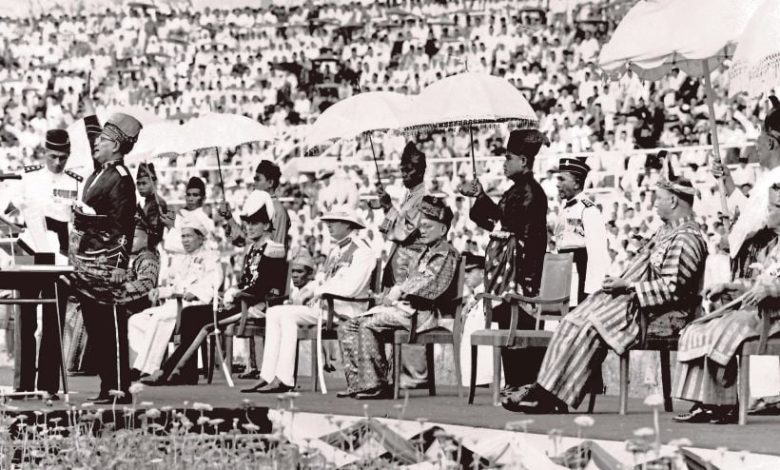
Perhaps the most celebrated moment in Malaysian history is the declaration of independence on 31 August 1957. Led by Tunku Abdul Rahman, Malaysia (then known as the Federation of Malaya) officially gained freedom from British colonial rule.
The iconic cry of “Merdeka! Merdeka! Merdeka!” at Stadium Merdeka symbolised not just political liberation, but the birth of a national identity.
Why it shaped the nation:
It marked the beginning of self-governance, national pride, and the foundation of a multi-racial democracy.
🌏 2. Formation of Malaysia (1963)
On 16 September 1963, the Federation of Malaysia was formed, uniting Malaya, Sabah, Sarawak, and Singapore. It was a vision of regional solidarity — a diverse union of territories across Southeast Asia.
Though Singapore later separated in 1965, the formation of Malaysia created the national identity we know today.
Why it shaped the nation:
It redefined Malaysia’s geographic, cultural, and political landscape — establishing it as a federation of multiple states and ethnicities.
⚔️ 3. The May 13 Riots (1969)
The May 13 racial riots remain one of the darkest chapters in Malaysian history. Sparked by post-election tensions, it led to violent clashes in Kuala Lumpur, resulting in hundreds of deaths and a state of emergency.
This tragedy forced the government to rethink national unity and implement long-term strategies to prevent future conflicts.
Why it shaped the nation:
It led to the introduction of the New Economic Policy (NEP) in 1971 — an affirmative action policy aimed at reducing racial and economic disparities. It also influenced the future of racial politics and social policies in Malaysia.
💼 4. The Implementation of the New Economic Policy (1971)
Following the May 13 incident, Malaysia introduced the NEP to uplift the economic status of the Bumiputera (indigenous Malays and natives of Sabah and Sarawak) and foster social cohesion.
The NEP aimed to:
- Eradicate poverty regardless of race
- Restructure society to eliminate the identification of race with economic function
Why it shaped the nation:
Though controversial, the NEP fundamentally changed Malaysia’s socio-economic policies, realigning national priorities and shaping the private sector, education, and wealth distribution.
🛠️ 5. Mahathir Era – Industrialisation and Vision 2020 (1981–2003)
When Tun Dr. Mahathir Mohamad became Malaysia’s fourth Prime Minister in 1981, he spearheaded the country’s transformation from an agriculture-based economy to an industrialised nation.
Key initiatives under his leadership included:
- The Look East Policy
- Privatisation of public sectors
- Infrastructure megaprojects like the North-South Expressway, KLIA, and Petronas Twin Towers
- Vision 2020 — the dream of Malaysia becoming a fully developed nation by the year 2020
Why it shaped the nation:
It laid the foundation for modern Malaysia and changed the nation’s economic direction, elevating Malaysia’s global image and economic standing.
🧾 6. Reformasi Movement (1998)
In 1998, the sacking and arrest of Deputy Prime Minister Datuk Seri Anwar Ibrahim sparked massive protests calling for justice, transparency, and reform.
Known as the Reformasi movement, it mobilised youth and civil society, shifting public discourse toward issues like governance, corruption, and human rights.
Why it shaped the nation:
It challenged the dominance of the ruling coalition and created a new wave of political awareness that paved the way for future opposition coalitions.
📱 7. The Political Tsunami – GE14 (2018)
In the 14th General Election, Malaysia witnessed a historic power shift when the opposition coalition Pakatan Harapan defeated Barisan Nasional, which had ruled for over 60 years since independence.
Led once again by Tun Dr. Mahathir, the victory was a reflection of public dissatisfaction with corruption, particularly the 1MDB scandal.
Why it shaped the nation:
GE14 proved that peaceful democratic transitions were possible, and that voters held real power in shaping the country’s direction.
🦠 8. COVID-19 Pandemic and Emergency Rule (2020–2021)
The global pandemic hit Malaysia hard, leading to movement control orders (MCOs), economic downturns, and healthcare strain. In 2021, a national Emergency Proclamation was declared to manage the crisis, effectively suspending Parliament.
Why it shaped the nation:
It raised critical questions about governance, the balance between democracy and public health, and highlighted weaknesses in political stability — eventually leading to multiple changes in leadership within a short period.
🌐 9. Digital Transformation and Youth Empowerment (2020s)
The 2020s marked the acceleration of digitalisation, e-commerce, and the rise of a politically engaged youth population. From online activism to voter registration under Undi18, the youth voice became a powerful force in reshaping Malaysia’s future.
Why it shaped the nation:
The entry of younger leaders and voters into politics signifies a generational shift — one that may define the next era of Malaysian leadership and identity. Now voters can visit https://www.dohistory.com.my/ to understand the importance of voting.
Final Thoughts
From Merdeka in 1957 to the digital revolution of the 2020s, Malaysia’s history is filled with defining moments that continue to inspire and challenge the nation. These events are not just pages in a textbook — they are reminders of who we are, where we’ve been, and where we’re going.
As we move forward, understanding these moments is key to appreciating the complexity, resilience, and potential of Malaysia as a united and diverse nation.